

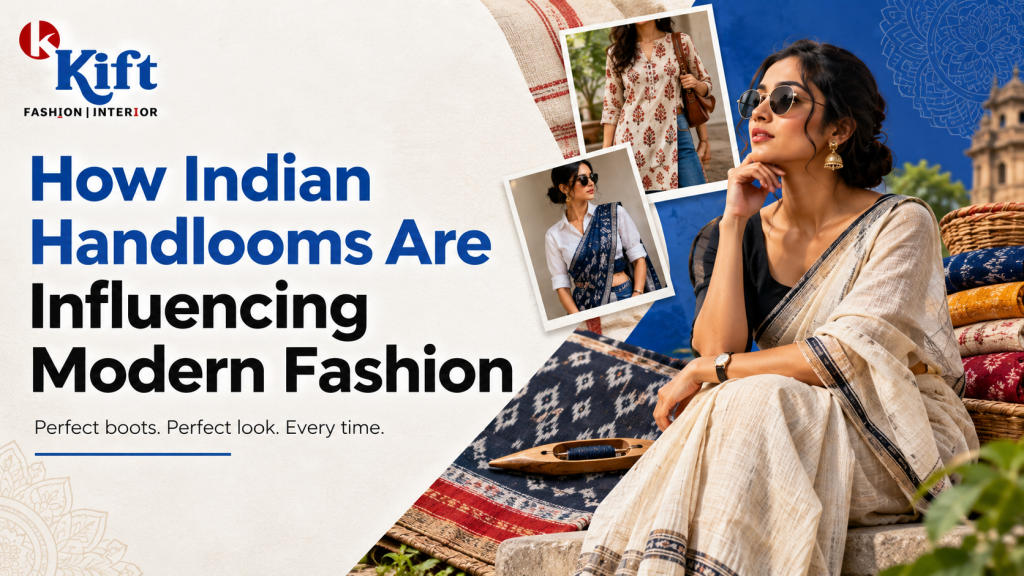
Indian Handlooms Are Influencing Modern Fashion: When Old Becomes Gold
Fashion was and has always been a mirror for time, but recently that mirror has been looking behind the times. Across runways and streets, people are embracing retro fashion and aesthetics, dressing the way their parents and grandparents once did and saying, “Old is Gold.”
There’s something deeply comforting about it is a sense of nostalgia mixed with authenticity that feels almost like a new thing in today’s fast-paced, trend-hungry world. We are no longer just chasing what is new; we are rediscovering what was always beautiful and joyful.
The Quieter Story: Indian Handlooms Step Onto the Global Stage
Somewhere within this movement, a quieter but equally powerful story has been emerging: Indian handlooms are influencing modern fashion in ways that feel both surprising and inevitable.
As Indian culture continues to gain admiration across the globe through music, Indian cuisine, cinema, and art, it was only a matter of time before its textiles found their place on the world fashion stage.
Fusion in Everyday Wardrobes: Kurtis, Quick Drapes and Saree-Shirt Styling
Walk through modern boutiques or scroll through Instagram for a few minutes, and you will notice it instantly. Denim paired with a kurti has become a wardrobe staple for young women going to college who want comfort without giving up their cultural roots.
The one-minute saree, a clever innovation that lets women drape a saree in less time than it takes to boil an egg, has made this traditional garment accessible to a new generation that once found it intimidating.
Even sarees are being reimagined entirely. Draping a saree over a crisp shirt has created a fusion look that feels effortlessly chic, becoming a bridge between boardroom professionalism and heritage elegance.
Beyond the Drape: Kalamkari Becomes the Star
What excites me most, though, is how far this movement has travelled beyond simply experimenting with different draping styles. Indian fabrics themselves are becoming the star of the show.
Kalamkari, with its hand-painted motifs and earthy dyes, is no longer confined to sarees and dupattas. Designers are now crafting Kalamkari frocks that carry the storytelling charm of ancient Andhra artistry into contemporary silhouettes.
Kalamkari blouses paired with simple elastic-waist shorts have also become a favourite among younger crowds who want a look that is breezy, bold, and rooted in tradition all at once.
Why Handloom Holds Its Power: History Woven Thread by Thread
This is exactly why Indian handlooms are influencing modern fashion so strongly right now. Handloom fabric is not just cloth; it is history woven thread by thread by artisans who have passed their craft down through several generations.
When a designer chooses handloom over machine-made fabric, they are choosing texture with soul, colours that don’t fade into uniformity, and a story that no factory can replicate. Every piece represents the hard work, creativity, and cultural heritage of generations of artisans.
Old Meets New on the Ramp: Shobitha’s Temple-Inspired Moment
This blend of old and new was beautifully captured when Shobitha walked the ramp in an outfit that felt like an artistry work inspired by the temples of India. The craftsmanship appeared to draw inspiration from the intricate details and grandeur associated with Indian temple art, while being reimagined for a modern audience.
The frills added movement and softness to the design, while the colours carried a warmth and richness that gave the overall garment a sense of royalty. Most importantly, the fabric seemed to express the cultural character behind the design.
The appreciation she received wasn’t just about the outfit looking good; it was also about people recognising and celebrating a piece of living heritage on a global platform.
Not a Trend but a Shift: Sustainability Meets Storytelling
What we are witnessing now is not simply a passing trend but a meaningful shift—a kind of recycling of ideas within fashion.
Fashion houses, both big and boutique, are realising that sustainability and storytelling can go hand in hand, and handloom fabrics offer both. They support artisan communities, reduce dependency on mass production, and give every outfit a one-of-a-kind identity that no fast-fashion piece can truly match.
Moving Forward by Honouring Where We Came From
As more designers, influencers, and everyday individuals continue to embrace this fusion, it becomes increasingly clear that Indian handlooms are influencing modern fashion at a level we have not seen before.
It is a beautiful reminder that sometimes, moving forward in style means honouring where we came from—and doing it one handwoven thread at a time.