

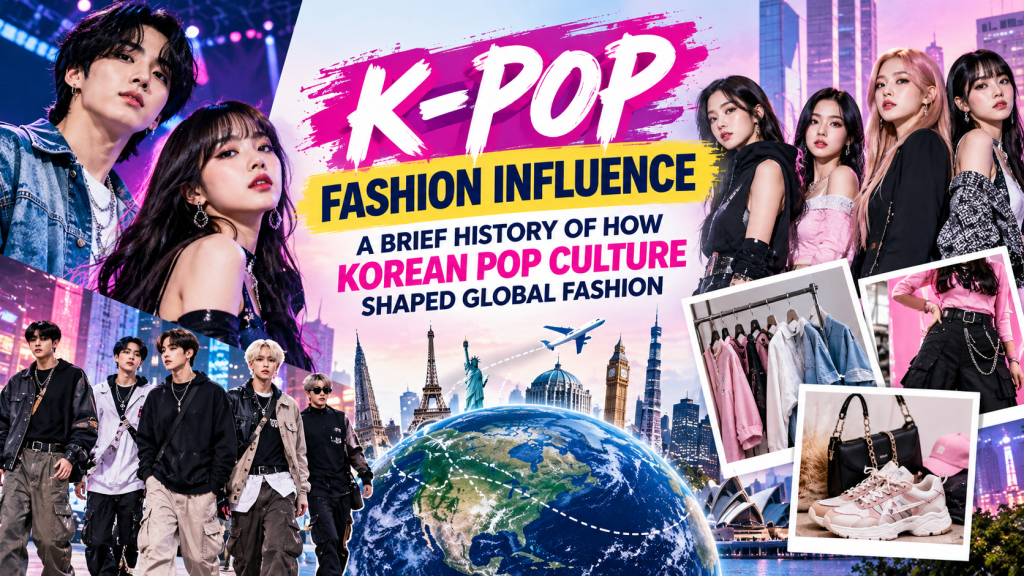
K-pop fashion influence has transformed the global fashion industry, shaping trends in streetwear, luxury clothing, hairstyles, makeup, and everyday styling. K-pop artists have become international fashion icons, inspiring millions of fans to experiment with their appearance and express their individuality. From bold concert outfits and oversized streetwear to designer collaborations and contemporary Korean styles, K-pop has helped redefine how people around the world discover and follow fashion trends. This influence did not happen overnight. It developed through several stages, shaped by the growth of Korean pop music, social media, celebrity-brand partnerships, and the changing relationship between artists and their audiences.
Understanding this journey reveals how K-pop evolved from a regional music movement into a global cultural force that continues to influence fashion designers, clothing brands, and everyday consumers.
The Origins of K-Pop Fashion: The 1990s and Early 2000s
The 1990s marked the beginning of the Korean Wave, as South Korean music and entertainment began gaining popularity in other Asian countries and gradually reaching Western audiences. Early K-pop acts such as Seo Taiji and Boys introduced distinctive styles that combined hip-hop influences, androgynous clothing, baggy pants, caps, and urban streetwear.
Their music and visual identities reflected the global hip-hop movement that was gaining popularity at the time. During the early 2000s, K-pop groups continued developing this aesthetic through music videos and live performances, incorporating bright colours, unusual hairstyles, and carefully styled stage costumes.
At this stage, the connection between K-pop and fashion was mainly visible in music videos, performances, television appearances, magazines, and the styles adopted by fans. Although K-pop was building a dedicated audience, its influence on the international fashion industry was still developing.
The Rise of K-Pop Fashion in the Late 2000s and Early 2010s
The late 2000s and early 2010s marked an important period in the growth of K-pop and its fashion influence. Korean pop music gained wider recognition across Asia and in Western markets. Groups such as Girls’ Generation and BIGBANG attracted millions of fans, making their music videos, performances, and fashion choices increasingly influential.
Each group developed a recognisable visual identity. BIGBANG became known for bold fashion statements, experimental combinations, and eye-catching outfits. Girls’ Generation popularised coordinated group styling, while 2NE1 became associated with rebellious and edgy fashion. SHINee attracted attention for colourful streetwear and distinctive styling.
The emergence of YouTube and other social media platforms made K-pop more accessible to international audiences. Fans could watch performances, revisit music videos, and follow their favourite artists more easily. Many began recreating idol-inspired looks, incorporating streetwear, unusual accessories, and bright colours into their own wardrobes. This period helped establish K-pop as an increasingly visible influence on global fashion.
The Social Media Revolution: The 2010s
The 2010s brought a major change in how K-pop fashion reached audiences around the world. Alongside music videos and stage performances, artists began sharing more photographs and videos of their everyday lives through social media. Fashion magazines and other media outlets also featured K-pop celebrities, showcasing their outfits and discussing their personal styles.
Social media helped turn these fashion choices into trends that fans could quickly discover, discuss, and recreate. The influence extended beyond clothing and footwear to cosmetics, hairstyles, accessories, and personal presentation. K-pop artists also became increasingly involved in fashion campaigns and collaborations with established fashion houses, using their online reach to introduce brands and styles to younger audiences.
BTS, BLACKPINK, and the New Fashion Icons of the 2020s
During the 2020s, K-pop became an established presence in the global fashion conversation. The international popularity of groups such as BTS and BLACKPINK contributed to greater attention towards Korean pop culture and increased collaboration between K-pop artists and fashion houses.
BTS helped bring greater visibility to luxury streetwear and experimental styling, influencing fashion conversations around clothing, hairstyles, and makeup. BLACKPINK members Jennie, Jisoo, Rosé, and Lisa have also built strong connections with major fashion brands through campaigns, public appearances, and social media. Lisa, for example, has been associated with luxury fashion houses including Saint Laurent and Celine.
These partnerships showcase the variety of styles associated with K-pop, ranging from luxury streetwear and casual outfits to elegant eveningwear. For fashion houses, working with popular K-pop artists provides opportunities to reach international audiences, while artists gain greater visibility in the fashion industry.
What Does K-Pop Say About Streetwear?
Streetwear is one of the most recognisable elements of K-pop fashion. Many idols use urban-inspired clothing in music videos, performances, and everyday appearances. This style also allows artists to experiment with different aesthetics, combining luxury pieces with sportswear, punk-inspired details, and casual clothing.
Common elements of K-pop-inspired streetwear include oversized shirts, loose-fitting trousers, jackets, statement bags, belts, and colourful accessories. Some looks are understated and sporty, while others use dramatic combinations and bold styling to create a distinctive appearance.
Layering is another important feature. Artists may combine T-shirts with shirts, dresses with other garments, or wide-leg trousers with jackets and statement footwear. Hair colour, eye makeup, lashes, jewellery, and other accessories can also contribute to an individual look. Male idols may experiment with makeup and jewellery, while female idols explore a wide range of clothing and beauty styles. These choices demonstrate how K-pop fashion encourages experimentation and allows fans to express their own identities.
Luxury Fashion Brands and the Power of K-Pop
The growing popularity of K-pop has created new opportunities for artists to work with luxury fashion houses. Fashion companies increasingly recognise the value of Korean pop culture and the international audiences that follow its artists. Collaborations allow brands to connect with younger consumers who are interested in K-pop, Korean culture, and the fashion choices of their favourite idols.
These relationships can benefit both sides. Artists gain exposure through fashion campaigns, events, magazine features, and brand social media accounts. Fashion labels, in turn, can introduce their collections to highly engaged audiences and build stronger connections with fans through long-term partnerships.
The influence extends beyond luxury labels. Everyday clothing retailers, independent designers, Korean fashion brands, and online marketplaces have also attracted attention from consumers looking for K-pop-inspired clothing. As a result, fans can explore a range of styles and price points when recreating their favourite looks.
Streetwear and Personal Style: K-Pop Fashion in the 2020s
K-pop fashion continues to evolve in the 2020s, with artists exploring different aesthetics while developing their individual identities. Streetwear remains popular, but contemporary K-pop styling also draws inspiration from earlier fashion eras, futuristic designs, distinctive stage costumes, and the exaggerated looks of the 1980s and 1990s.
Groups such as NewJeans have brought renewed attention to styles inspired by the turn of the millennium. Other artists experiment with bold silhouettes, unusual combinations, and performance outfits that blend different fashion influences.
Social media platforms such as TikTok and Instagram Reels have made these trends easier to discover and recreate. Fans share outfit recreations, styling challenges, and their own interpretations of idol fashion. Korean fashion retailers and online stores also give international shoppers more opportunities to explore these looks.
Today, K-pop offers a broad range of fashion inspiration, from recreating an idol’s complete outfit to adapting individual elements such as oversized clothing, accessories, hairstyles, or makeup. Fans can follow a trend closely or use it as a starting point for developing their own personal style.
The Future of K-Pop Fashion Influence
The relationship between K-pop and the global fashion industry is likely to continue evolving as new artists emerge and international audiences grow. Fashion brands increasingly collaborate with musicians through campaigns, runway appearances, special collections, and promotional events, creating new ways for music and fashion to connect.
Growing interest in Korean fashion and beauty may also create more opportunities for Korean designers and local brands to reach international customers. At the same time, fashion houses around the world may continue exploring partnerships with Korean celebrities and artists to connect with new audiences.
Although the exact direction of future trends is difficult to predict, K-pop’s combination of music, visual identity, celebrity influence, and digital communities gives it several ways to shape fashion conversations. The relationship between artists, brands, and fans will remain an important part of how these styles develop and spread.
Conclusion: The Lasting Impact of K-Pop on Global Fashion
The history of K-pop fashion influence reflects the worldwide growth of Korean music and pop culture, as well as the changing trends adopted by younger generations. From the hip-hop-inspired looks of early K-pop acts to the luxury streetwear and designer collaborations associated with contemporary idols, K-pop has influenced how millions of people discover, interpret, and wear fashion.
K-pop artists have helped popularise modern streetwear, experimental styling, Korean fashion, and collaborations with luxury brands. Through music videos, live performances, and social media, fashion has become an important part of the connection between artists and their audiences. Beyond individual trends, K-pop has brought together a global community of fans who share an interest in Korean music, creative styling, and experimenting with personal expression.