

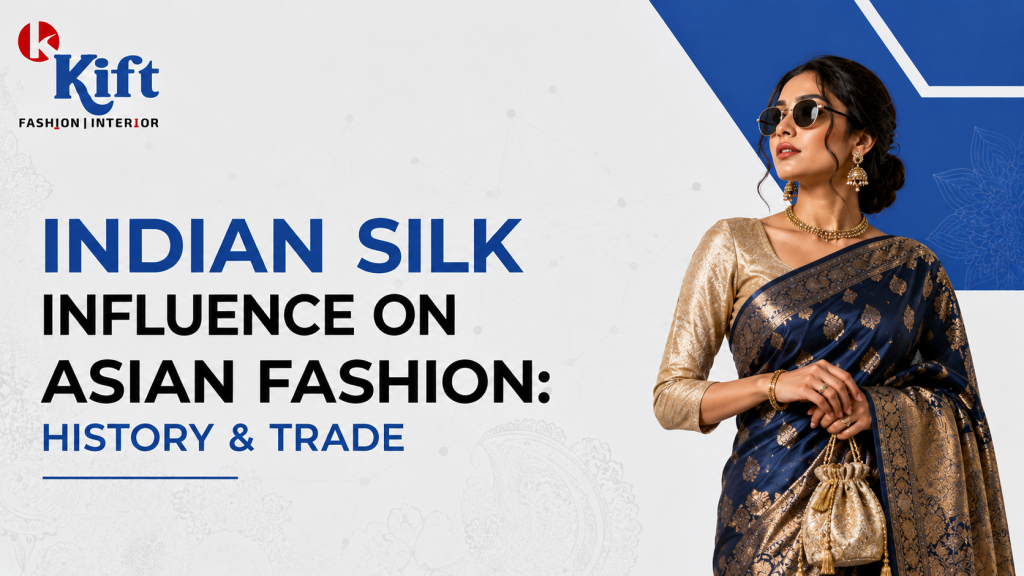
Indian silk influence has been an important part of Asia’s long history of textiles, trade, and fashion. India developed sophisticated silk weaving traditions across different regions, particularly in the south, where silk became closely associated with weddings, religious ceremonies, royal patronage, and luxury clothing. Through trade routes, merchants, royal courts, and cultural exchange, Indian textiles reached many parts of Asia and interacted with existing local fashion traditions.
The Early History of Indian Silk
Silk has been known and used in India for many centuries. India developed its own silk-producing traditions while also maintaining connections with other major silk-producing regions of Asia.
Different parts of India developed distinctive methods of producing and weaving silk. Karnataka, Tamil Nadu, Andhra Pradesh, Assam, and other regions became associated with different varieties and traditions of silk.
Silk was valued for its smooth texture, natural shine, durability, and ability to hold intricate patterns. These qualities made it particularly attractive for ceremonial clothing and garments worn by wealthy communities.
The Development of South Indian Silk
South India developed several famous silk-weaving centers. Kanchipuram in Tamil Nadu became renowned for its richly woven silk sarees, while Dharmavaram in Andhra Pradesh developed its own distinctive style. Uppada in Andhra Pradesh also became associated with fine silk weaving.
These traditions developed different approaches to colors, borders, motifs, weaving techniques, and decorative elements.
Silk sarees became especially important during weddings, festivals, religious ceremonies, and other significant occasions. In many South Indian communities, wearing an elaborate silk saree became associated with prosperity, celebration, and family tradition.
The Telugu word pattu, for example, is commonly used to mean silk and is frequently associated with silk sarees and garments.
Indian Textiles and Asian Trade
Indian textiles traveled extensively through the ancient and medieval trading networks connecting South Asia with other parts of Asia.
Maritime trade was particularly important. Indian ports connected merchants with Arabia, Southeast Asia, and other regions around the Indian Ocean. Indian merchants traded textiles alongside spices, precious materials, and other commodities.
Indian cotton textiles were among the most important products traded internationally, while silk and other luxury textiles also circulated through regional markets.
The movement of textiles did not necessarily mean that foreign societies simply copied Indian clothing. Instead, imported fabrics were often incorporated into existing local traditions.
Influence on Southeast Asian Fashion
Indian textiles had particularly strong connections with Southeast Asia. Merchants, religious communities, and royal courts created cultural links between India and kingdoms across the region.
Indian fabrics and decorative motifs became part of broader textile traditions in places such as Indonesia, Malaysia, Thailand, and other parts of Southeast Asia.
However, these cultures already possessed sophisticated textile traditions of their own. Indian textiles therefore became part of a process of cultural exchange rather than completely replacing local clothing.
This exchange can be seen as part of the broader Indian silk influence that developed through trade and cultural contact across Asia.
Silk and Royal Fashion
Silk was closely associated with wealth and status in many Asian societies. Royal courts and wealthy families valued luxurious fabrics because clothing could communicate social position.
In India, silk garments were often produced with elaborate borders, decorative patterns, and metallic thread work. Some South Indian weaving traditions became particularly famous for their rich designs and ceremonial appearance.
Gold and silver threads, including zari, were used to create elaborate decorative details. These techniques helped establish silk sarees as prestigious garments for important occasions.
The Role of Merchants and Trade Networks
Merchants played a crucial role in spreading textiles across Asia. Indian traders operated along maritime routes connecting the Indian subcontinent with Southeast Asia and the wider Indian Ocean world.
Textiles were valuable trade goods because they were relatively portable and could be exchanged for spices, precious materials, and other commodities.
Over time, these commercial connections also created cultural exchanges. Designs, weaving techniques, clothing preferences, and decorative traditions could travel alongside the fabrics themselves.
Indian Silk in Modern Fashion
The influence of Indian silk continues today. Traditional silk sarees remain an important part of weddings, festivals, and religious celebrations across India.
Modern Indian designers have also experimented with silk by combining traditional weaving techniques with contemporary silhouettes. Silk can now be found in sarees, dresses, jackets, skirts, scarves, and other forms of modern clothing.
Indian silk has also gained visibility internationally through the Indian diaspora. Weddings and cultural celebrations outside India have helped introduce traditional silk sarees to audiences around the world.
At the same time, designers and consumers are increasingly interested in preserving traditional weaving communities and supporting handcrafted textiles.
Conclusion
The history of Indian silk influence is best understood as part of a much larger network of Asian textile exchange. India was not the only major center of silk production, and Asian fashion developed through contributions from many cultures, including China, Persia, Central Asia, and Southeast Asia.
Nevertheless, Indian silk and textile traditions played an important role in regional trade and cultural exchange. South Indian weaving centers such as Kanchipuram, Dharmavaram, and Uppada developed distinctive silk traditions that remain important today.
From ancient trade routes to modern weddings and international fashion, Indian silk influence continues to connect traditional craftsmanship with contemporary style. Its importance lies not in replacing other Asian fashion traditions, but in becoming part of the rich exchange of textiles, techniques, and ideas that has shaped Asian fashion for centuries.