

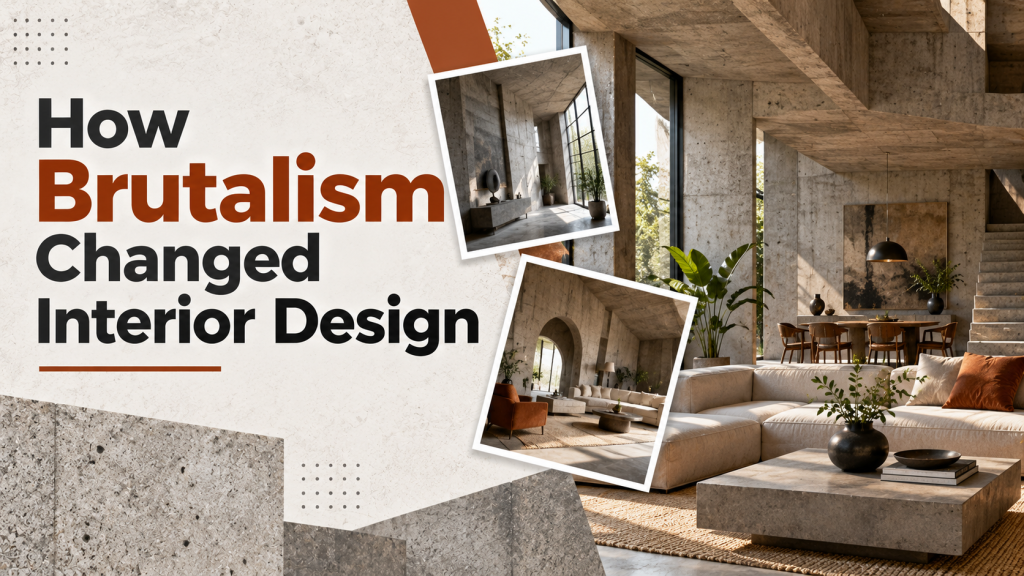
Brutalism transformed interior design by moving away from beauty, luxury, and decoration. Instead, it focused on raw materials, exposed structures, and geometric shapes.
While mid-century modern brutalism is best known for its use of exposed concrete, this architectural movement has expanded into furniture, lighting, residential and commercial interiors, restaurants, and contemporary design.
1. Brutalist Interior Design Makes Raw Materials Beautiful
Concrete, brick, steel, wood, and stone were often left in their natural state and exposed to view. These materials became important design elements, showing their natural textures and imperfections.
2. Exposed Structural Elements
Instead of hiding structural elements, builders and designers made beams, columns, and other construction details part of the interior design. These elements added character and highlighted the building’s structure.
3. Embraced Minimalism
Brutalism embraced minimalism by removing unnecessary decorations and focusing on essential elements. Structures, furniture, materials, and the use of space became important parts of the overall design.
4. Used Lighting to Cast Interesting Shadows
Heavy concrete and other textured materials allowed designers to create dramatic lighting effects. Natural and artificial light highlighted surfaces, creating interesting shadows and adding depth to interiors.
5. Created Sculptural Pieces of Furniture
Brutalist furniture often featured bold, solid, and geometric shapes. Coffee tables, chairs, shelves, and other furniture pieces took on a sculptural and monolithic appearance, making them stand out in a room.
6. Inspired Modern Takes on Brutalism
Modern brutalist interiors combine concrete and stone with softer materials such as wood, linen, and leather. Designers also use plants and warm lighting to create comfortable spaces while maintaining the bold character of brutalism.
The Legacy of Brutalism in Interior Design
Above all, brutalism encouraged interior designers to appreciate the beauty of raw materials and natural imperfections. Contemporary brutalist interiors take inspiration from mid-century brutalism while combining timber, stone, and concrete with plants and natural fabrics to create a softer appearance.
The impact of brutalism on residential and commercial interiors has been significant. Its influence can still be seen in modern homes, luxury hotels, cafes, and offices.
Brutalism introduced a new design philosophy that prioritized structure, materials, and minimalism. Rather than relying on decorative elements, designers and builders began using architectural features, natural textures, and simple forms as the main elements of interior design.