

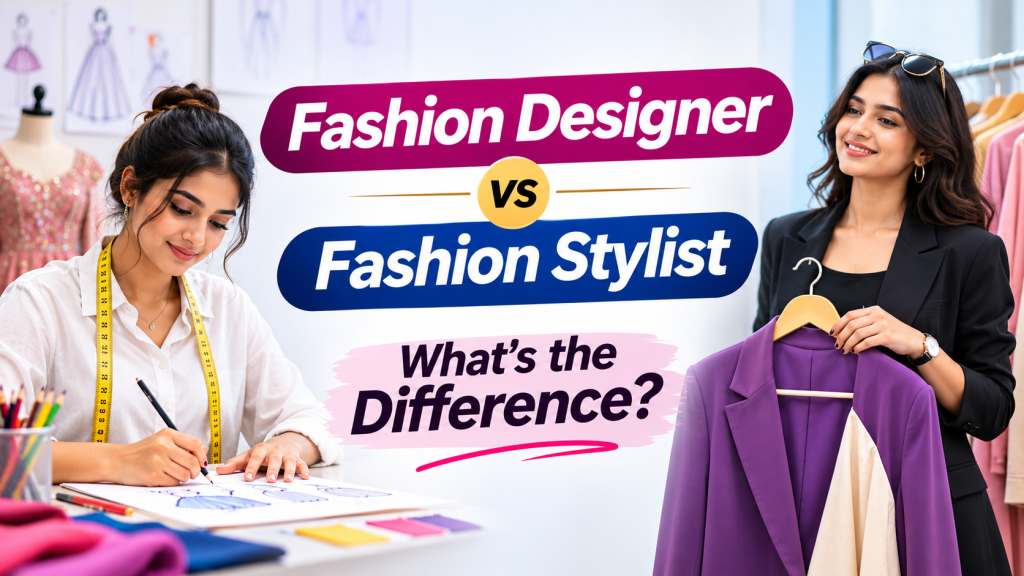
The fashion industry offers many exciting career opportunities for creative people. Two popular career choices are fashion designing and fashion styling. Understanding Fashion Designer vs Fashion Stylist can help students identify how these professions differ in their responsibilities, skills, and work processes and choose the right career path.
What Does a Fashion Designer Do?
A fashion designer creates clothing, footwear, or accessories. They develop original designs by studying fashion trends, understanding customer preferences, and experimenting with fabrics, colours, and patterns.
Fashion designers are involved in several stages of clothing production, including:
- Researching fashion trends and customer needs.
- Creating sketches and design concepts.
- Selecting suitable fabrics, colours, and materials.
- Developing patterns and garment samples.
- Working with tailors and production teams.
- Making changes to improve the final design.
Fashion designers may work for clothing brands, fashion houses, export companies, or their own businesses. Some specialize in bridal wear, menswear, womenswear, children’s clothing, or sustainable fashion.
What Does a Fashion Stylist Do?
A fashion stylist selects and coordinates clothing, footwear, accessories, and other elements to create a particular appearance. Instead of primarily creating new garments, stylists use existing fashion pieces to achieve a desired look.
Their responsibilities may include:
- Selecting outfits for photoshoots and fashion shows.
- Styling celebrities, models, or individual clients.
- Coordinating colours, accessories, and footwear.
- Understanding current trends and personal preferences.
- Preparing outfits for advertisements, films, and magazines.
- Creating looks that match a brand’s visual identity.
Fashion stylists may work with photographers, designers, models, actors, advertising agencies, and media companies.
Fashion Designer vs Fashion Stylist: Key Differences
When comparing Fashion Designer vs Fashion Stylist, the main difference is that a designer creates garments, whereas a stylist selects and coordinates fashion pieces to create a complete appearance.
| Factor | Fashion Designer | Fashion Stylist |
|---|---|---|
| Main role | Creates clothing and accessories | Creates coordinated looks |
| Primary focus | Design, fabrics, and garment construction | Appearance, presentation, and outfit selection |
| Important skills | Sketching, pattern making, and textile knowledge | Colour coordination, trend awareness, and styling |
| Common workplaces | Fashion brands and production studios | Photoshoots, media, fashion shows, and personal styling |
| Main output | Garments and collections | Styled outfits and visual presentations |
Which Career Should You Choose?
Choose fashion designing if you enjoy developing original clothing, experimenting with fabrics, and understanding how garments are constructed.
Fashion styling may suit you better if you enjoy coordinating outfits, following trends, and creating different looks for people or visual projects.
Both careers require creativity, communication skills, practical experience, and a strong portfolio. Internships and real-world projects can help students understand the industry before choosing a specialization.
Conclusion
Fashion designers create garments, while fashion stylists bring clothing and accessories together to create a complete look. Both professions play important roles in the fashion industry, and neither is limited to working in glamorous fashion shows.
Understanding Fashion Designer vs Fashion Stylist can help students identify their interests and choose a suitable career path. Learning about these career options during a fashion designing course can help students prepare for opportunities in the industry.
Interested in a career in fashion? Explore fashion design courses that offer practical training, portfolio development, and exposure to different areas of the industry.